1996: The Year Toys Took Over the World
Welcome back to our holiday deep dive into the world of toys, powered by real data. In part one we uncovered how steady growth and classic favorites shaped the toy industry from 1992 to 1995 using insights from the "Retail Sales: Hobby, Toy, and Game Stores" dataset from the U.S. Census Bureau via FRED®.

1996: The Year Toys Took Over the World
Welcome back to our holiday deep dive into the world of toys, powered by real data. In part one, we uncovered how steady growth and classic favorites shaped the toy industry from 1992 to 1995 using insights from the "Retail Sales: Hobby, Toy, and Game Stores" dataset from the U.S. Census Bureau via FRED®.
🔍 Preview the dataset. | ⬇️ Download the CSV. | 🔍 View Querri Project
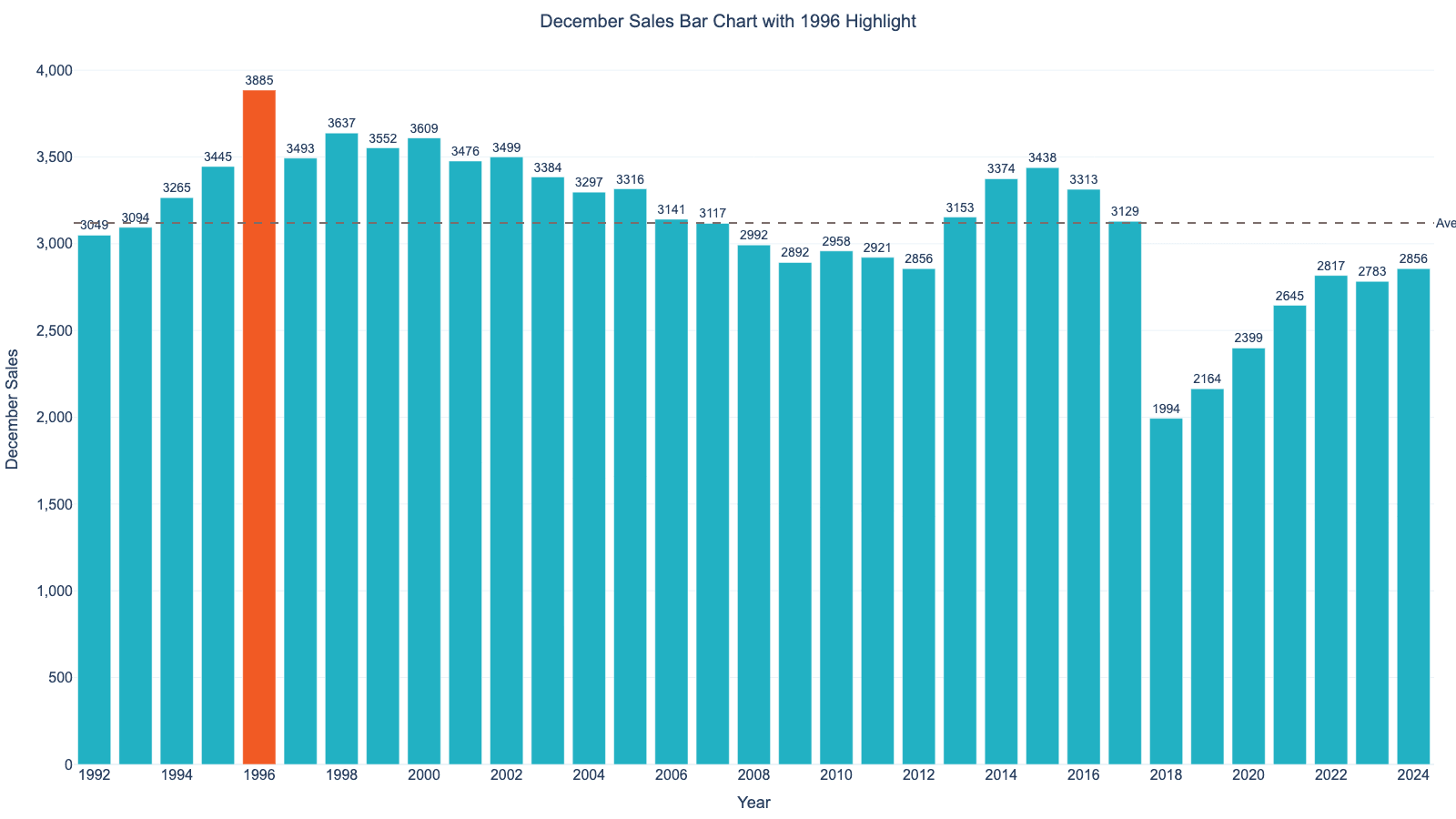
When I started exploring this dataset, December 1996 stood out and after more digging, the story around that date began to take shape... and it's anything but ordinary!
Let's zoom in on 1996, a year where the data absolutely explodes off the chart. But the numbers alone don't explain why, so I started reading about that year and I found that 1996 wasn't just another year of toy sales; it was a complete game-changer.
This wasn't just a simple uptick in data. It was a cultural phenomenon that transformed living rooms, redefined holiday shopping, and cemented the toy industry as a major economic force. Let's explore the powerful forces that made 1996 the year toys officially took over. You'll see how a combination of key products and a confident consumer base created a frenzy that's still talked about today...a fun find by looking at a government toy sales data set.
The Perfect Economic Storm
Before a single toy could fly off the shelves, the conditions had to be just right. In 1996, the United States was experiencing a period of significant economic strength. The stock market was climbing, unemployment was low, and consumer confidence was soaring. People had disposable income, and they were ready to spend it.
This economic optimism created a fertile ground for retailers. Shoppers weren't just buying necessities; they were looking for joy, entertainment, and the next big thing. The data shows a dramatic spike in toy sales that far outpaced the steady growth of previous years. This surge reflects a public that was not only able but eager to participate in the consumer crazes of the day. This strong economic foundation empowered families to chase after the "must-have" items, turning shopping lists into treasure hunts.

A Red Monster and a Holiday Frenzy: The Tickle Me Elmo Effect
If there's one data point that leaps out from the 1996 spike, AI analysis quickly links it to the reign of Tickle Me Elmo. This seemingly simple plush doll, which giggled and shook when tickled, became the epicentre of a retail storm. It was everywhere...and nowhere (since stores couldn't keep it in stock)! Media analysis tools showed Elmo fever erupting overnight after a popular talk show appearance.
The "Elmo-mania" that swept the nation was unlike anything seen before. Stories of parents camping outside stores, engaging in bidding wars, and paying exorbitant prices on the secondary market became national news. The scarcity of the toy only fueled the fire, creating a powerful feedback loop of demand. Our data shows a sharp, vertical climb in sales leading into the holiday season, a direct reflection of this craze. Tickle Me Elmo demonstrated a new formula for success: a lovable character, a simple interactive feature, and a wave of media hype could create demand far beyond supply. It instantly became the blueprint for the modern "must-have" holiday toy.
"To Infinity and Beyond!": The Power of Movie Tie-Ins
Here's where another story pops out...thanks again to smart pattern finding in the Census data. At the end of 1995, Disney and Pixar released Toy Story, giving toys personalities, dreams, and adventures. By Christmas 1996, kids everywhere wanted their own Buzz Lightyear and Woody figures. AI tools helped me see just how much these movie tie-ins moved the sales needle, as demand for licensed products shot up dramatically.
Kids didn't just want a toy; they wanted the Buzz Lightyear action figure with pop-out wings and laser sounds. The film created an emotional connection that translated directly into sales. The data shows that licensed merchandise became a massive driver of revenue this year. Toy Story proved that a compelling narrative could be a powerful marketing tool, turning moviegoers into dedicated consumers. This success solidified the movie tie-in as a cornerstone strategy for the toy industry, a model that continues to dominate decades later.
A New Dimension of Play: The Nintendo 64 and Digital Pets
While plush toys and action figures dominated the physical aisles, technology was about to change everything again. The launch of the Nintendo 64 in 1996 brought 3D gaming to millions of living rooms...one look at the dataset shows a spike in consumer spending on these consoles and their games. At the same time, AI-backed explorations highlight another trend: virtual pets like Giga Pets (and Tamagotchi) went from niche to mainstream. These digital companions, small enough to carry everywhere, created fresh demand in a whole new category.
Virtual pets introduced kids to digital nurturing. These tiny electronic devices required constant care...feeding, cleaning, and playing...creating a powerful sense of responsibility and attachment for their owners. They were collectible, portable, and addictive, making them a smash hit and another key contributor to the year's incredible sales figures.
A New Era for Toys
So, what did 1996 teach us? By using AI-powered analytics to look at this treasure trove of U.S. Census data, we see beyond just the numbers. We see how toys can ride waves of cultural excitement, economic confidence, and media synergy to new heights. We learn how data, when explored with the right tools, can tell an unforgettable story about holiday frenzies, must-have gadgets, and a nation's sheer delight in play.
The lessons and excitement of 1996 live on, guiding toy trends, marketing strategies, and the way we spot the next big thing...all still visible every time you look at those extraordinary spikes among the lines. And now, as ever, the data's real magic lies in the stories we discover together.