Toys, Trends, and Turmoil: The Impact of a Pandemic on Playtime post 1996
Welcome to part three of our deep dive into the "Retail Sales: Hobby, Toy, and Game Stores" dataset from the U.S. Census Bureau via FRED®, covering January 1992 through September 2025. With the help of AI-powered data analytics, it's been a joy to transform columns of sales figures into real stories about innovation, resilience, and the enduring magic of play. Let's uncover what the data reveals about how toys have evolved and adapted in the years since 1997.
Toys, Trends, and Turmoil: The Impact of a Pandemic on Playtime post 1996
Welcome to part three of our deep dive into the "Retail Sales: Hobby, Toy, and Game Stores" dataset from the U.S. Census Bureau via FRED®, covering January 1992 through September 2025. In part one, we explored how steady growth and classic favorites shaped the toy industry from 1992 to 1995, and in part two, we uncovered the explosive year of 1996. With the help of AI-powered data analytics, it's been a joy to transform columns of sales figures into real stories about innovation, resilience, and the enduring magic of play. Let's uncover what the data reveals about how toys have evolved and adapted in the years since 1997.
🔍 Preview the dataset. | ⬇️ Download the CSV. | 🔍 View Querri Project
The explosive year of 1996, with its Tickle Me Elmo frenzy and Nintendo 64 launch, set a new benchmark for the toy industry. But the transformation was only getting started. From 1997 all the way to the present, the world of toys has shifted dramatically...innovating through technology, adapting to online shopping, and, most recently, weathering an unprecedented global crisis.
Let's take a closer look at how toys have continued to capture our imaginations, how the events of 2020 fundamentally changed the landscape, and why, even in uncertain times, the simple joy of play remains essential...all brought into focus by digging deep into this robust dataset.
The Rise of Digital and Interactive Friends
As the dust settled from '96, a new era of interactive toys took over. These weren't just playthings; they soon became companions. Think Tamagotchi (1997) and Furby (1998)...digital pets and bots that demanded attention, taught responsibility, and responded to your care. They blurred the line between toy and friend, and set the pace for technology-driven play for a new generation.
E-commerce and the Global Toy Aisle
By the early 2000s, the way we bought toys was changing fast. Online marketplaces like Amazon and eBay expanded access, bringing local favorites to a global audience and making research and price comparison effortless. Viral toy crazes could erupt overnight. Toy makers reimagined how to connect with customers, keeping pace with a world that was always on.
The Enduring Power of Stories and Collectibles
Even as toys became smarter, some things didn't change. The magic of stories...from Toy Story to Star Wars, Harry Potter, and Marvel...continued to fuel demand for movie tie-ins, action figures, and now, collectibles that appeal as much to adults as to kids. The rise of Funko Pop! and trading cards proved that toys can be both a portal to childhood and a badge of fandom for all ages.
A Toy Story Interrupted: The 2020 Downturn
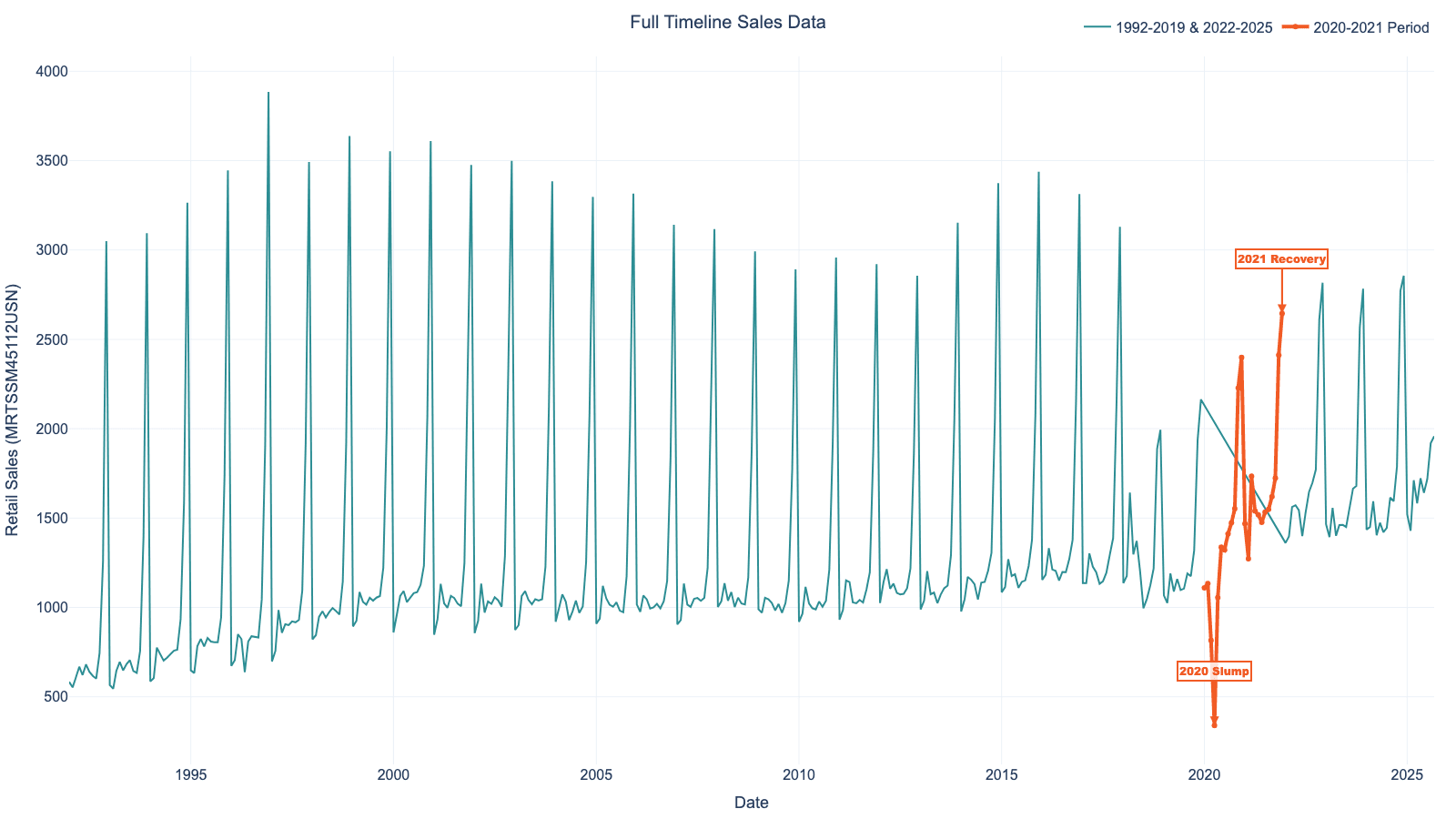
Here's where having that giant timeline of sales data really helped make sense of the headlines. In 2020, everything changed. When the COVID-19 pandemic hit, uncertainty rippled through every household and business. The numbers showed a sudden dip...stores closed, supply chains paused, and economic worry set in. Even toys took a back seat as the world recalibrated.
But here's the power of diving into the details with smart analytics: I could see not just the drop, but dig into what happened next with follow-up questions.
The 2021 Surge: How the Pandemic Supercharged Toy Sales
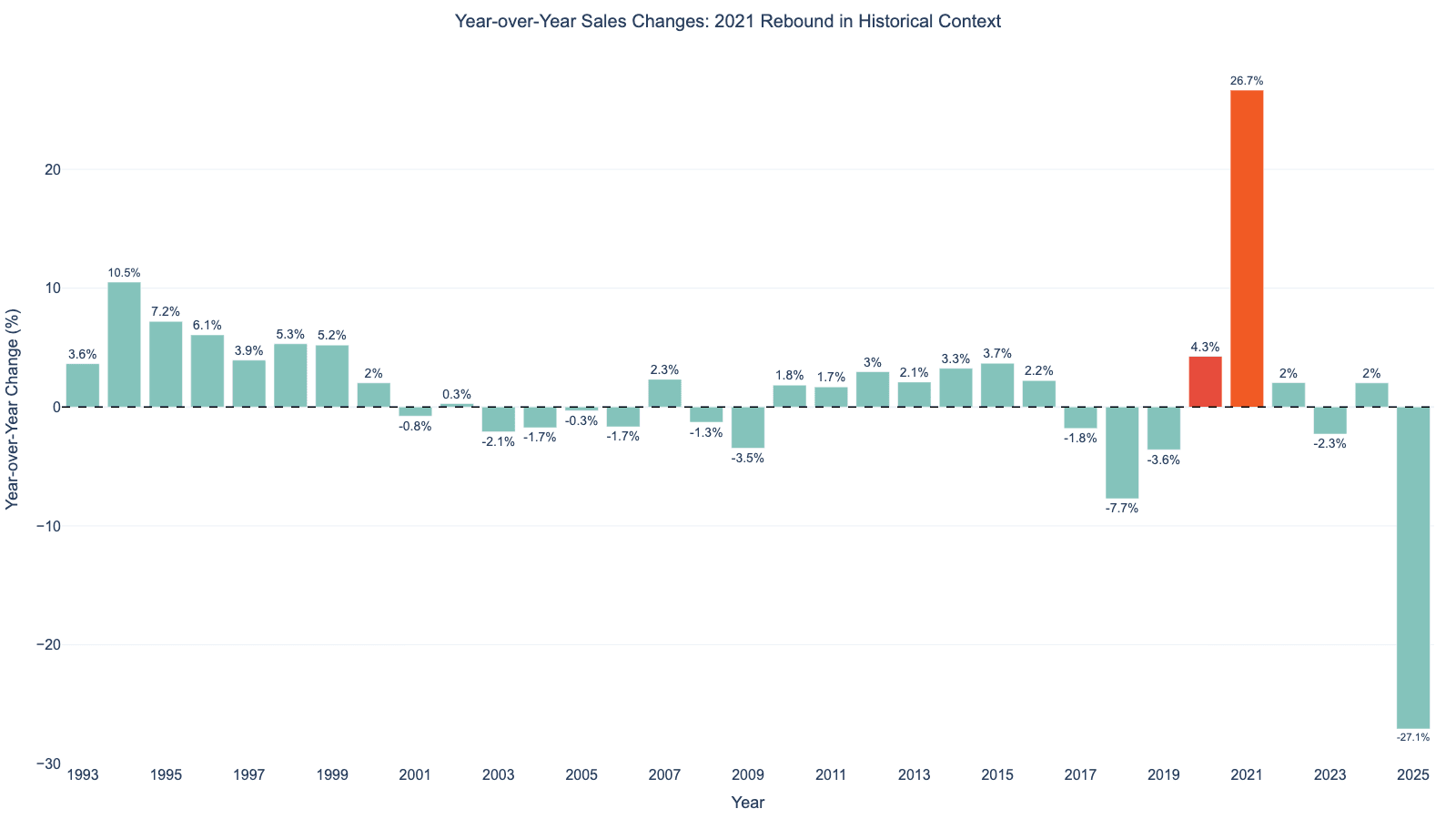
Looking closer at the graphs, I noted the dramatic rebound...and 2021 wasn't just a comeback, it was a record-breaking leap. That year saw the strongest year-over-year growth in the entire 33-year dataset: an incredible +26.67%. To put it in perspective, that's nearly 20 times the historical average growth rate of just 1.38%. No other year even came close—the next highest was way back in 1994 at +10.51%. In fact, 2021's rebound was 2.5 times larger than any other year on record, and it remains the only year in over three decades to exceed +15% growth.
Why was this surge so extraordinary? Lockdowns and school closures put toys, puzzles, and games at the center of daily life. With movie theaters, vacations, and restaurants on hold, households (supported by stimulus checks) funneled their entertainment budgets into bringing joy indoors.
The dataset highlighted which categories soared: board games and puzzles, trading cards like Pokémon, building sets like LEGO, and outdoor toys flew off the shelves. Even adults joined the fun...complex models, action figures, and nostalgia-fueled collectibles became wellness tools and reminders of happier times.
What Drove the Boom?
- Home Entertainment Became Essential: With families together around the clock, toys, games, and puzzles stepped up as heroes of home entertainment.
- Redistributed Spending: Money saved from trips and outings funneled straight into making home life enjoyable and meaningful.
- Stimulus Boost: Extra cash in hand from government payments accelerated the shift.
- Emotional Wellness & Nostalgia: Toys became comfort objects, sparking joy, childhood memories, and a sense of connection when the world felt uncertain.
- Outdoor and Active Play: With gyms and playgrounds closed, families rediscovered the simple pleasure (and necessity) of outdoor toys.
By leaning into the data, it's clear: after a dip in 2020, the surge in 2021 and beyond wasn't just a rebound...it was a transformation. And with the right analytical tools, it was easy to visualize just how powerful and broad-based this growth was.
Today and Tomorrow: A Resilient, Evolving Industry
This pandemic-era boom sped up trends already visible in our dataset: more adult engagement, broader definitions of play, and a focus on wellness and connection. App-connected kits, coding robots, STEM-focused activities, and collectibles now share shelf space with board games and classic dolls. Toy companies are keenly aware of their power to comfort, empower, and connect.
The beauty is, with easy-to-use AI analytics tools, anyone can explore these patterns and spot what matters most...not just raw numbers, but the heart of the story. Connecting data with real-life experiences keeps the magic alive.
The Unchanging Magic of a Gift
Looking back from 1997 to today, and especially through the lens of the pandemic, one lesson is clear: toys are about more than trends or sales. They're about hope, creativity, resilience, and the power to bring people together...no matter what's happening in the world.
This holiday season, as you wrap up a game, a set of cards, or maybe a nostalgic favorite you loved as a kid, know that you're passing on more than a present. You're sharing play...the world's most enduring magic.