Querri vs Databricks
Databricks' lakehouse platform is built for data engineering teams, not business analysts. With analyst-curated semantic layers required, 20 QPM rate limits, and dual billing from cloud providers, getting answers is slow and expensive. Querri lets anyone ask questions in plain English.
Feature-by-Feature Comparison
See how Querri and Databricks compare across the dimensions that matter most.
| Dimension | Querri | Databricks |
|---|---|---|
| Easy to Use | Natural language interface—no training required | Genie requires analyst-curated semantic layers (Genie Spaces) |
| Deploy Fast | Minutes from signup to first insight | 4–8 weeks to production with data engineering |
| Just Works | AI handles data cleaning and analysis automatically | Genie hard-limited to 20 queries/minute; curation required |
| All-in-One Platform | Clean, analyze, visualize, and share in one tool | BI/visualization still maturing; dashboard ecosystem immature |
| Proactive Insights | AI surfaces trends and anomalies automatically | No autonomous suggestions or proactive anomaly detection |
| Embedded Analytics | Lightweight SDK with white-label support | Embedding available but requires custom development |
| Transparent Pricing | Published plans from $16/user/mo with AI included | Dual billing: DBUs + cloud provider; $1K budget becomes $2K–$3K |
Easy to Use
Natural language interface—no training required
Genie requires analyst-curated semantic layers (Genie Spaces)
Deploy Fast
Minutes from signup to first insight
4–8 weeks to production with data engineering
Just Works
AI handles data cleaning and analysis automatically
Genie hard-limited to 20 queries/minute; curation required
All-in-One Platform
Clean, analyze, visualize, and share in one tool
BI/visualization still maturing; dashboard ecosystem immature
Proactive Insights
AI surfaces trends and anomalies automatically
No autonomous suggestions or proactive anomaly detection
Embedded Analytics
Lightweight SDK with white-label support
Embedding available but requires custom development
Transparent Pricing
Published plans from $16/user/mo with AI included
Dual billing: DBUs + cloud provider; $1K budget becomes $2K–$3K
No Curation Required
Databricks Genie requires data analysts to build and maintain curated semantic layers—called Genie Spaces—before business users can ask a single question. That means weeks of setup, ongoing maintenance, and a permanent dependency on your analytics team.
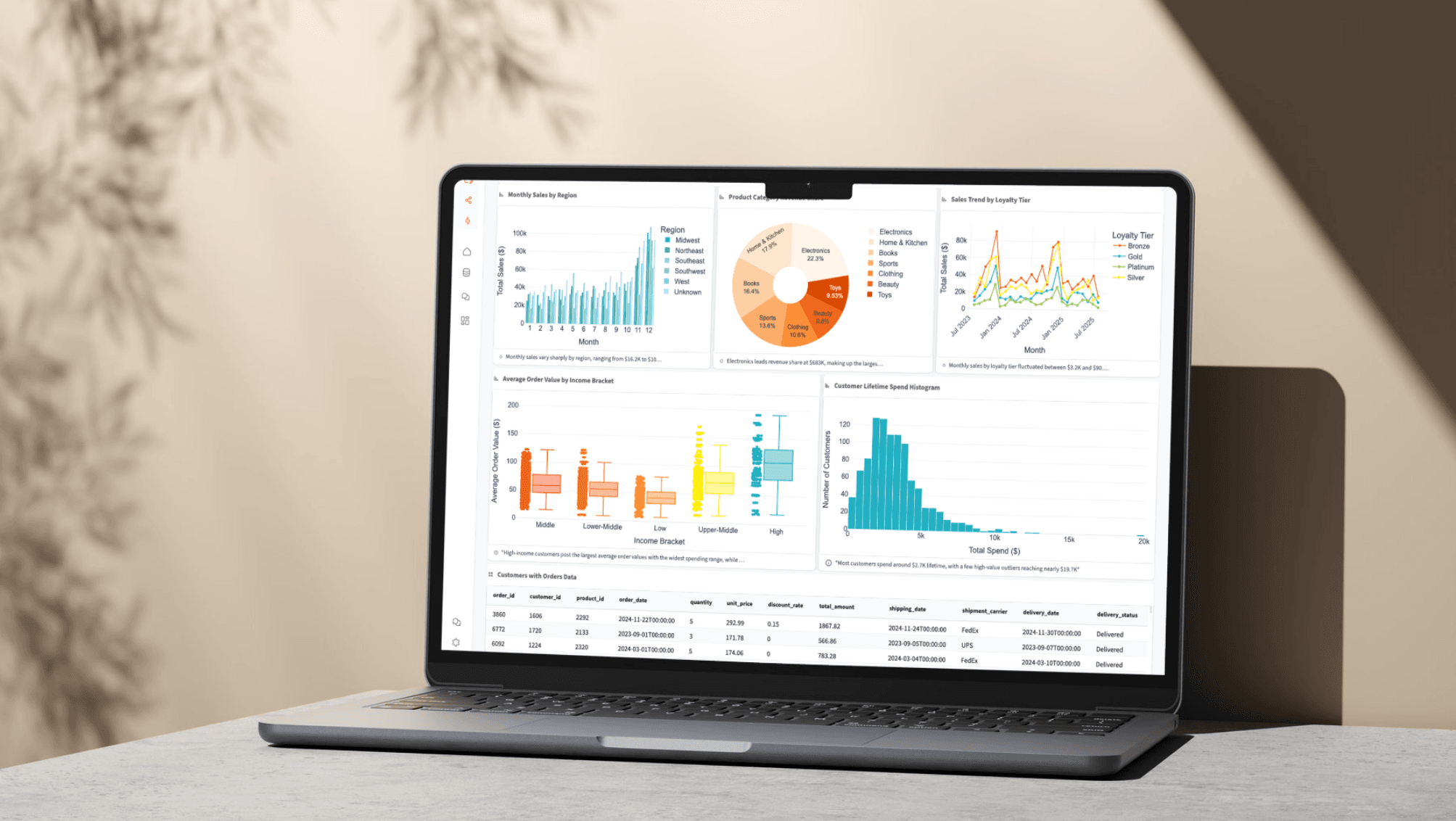
Querri works out of the box. Upload your data and start asking questions immediately. The AI understands your data structure, handles preparation automatically, and delivers visual answers without anyone having to curate anything first.
Zero Setup
Upload data and start asking questions—no semantic layers to build
AI-Powered Preparation
Automatic data cleaning eliminates manual curation work
Self-Service
Every team member can explore data without analyst gatekeeping
One Platform, One Bill
Databricks charges in DBUs (Databricks Units) plus your cloud provider charges separately for compute and storage. A $1,000 Databricks budget often becomes $2,000–$3,000 when AWS or Azure bills arrive. Two vendors, two billing models, zero predictability.
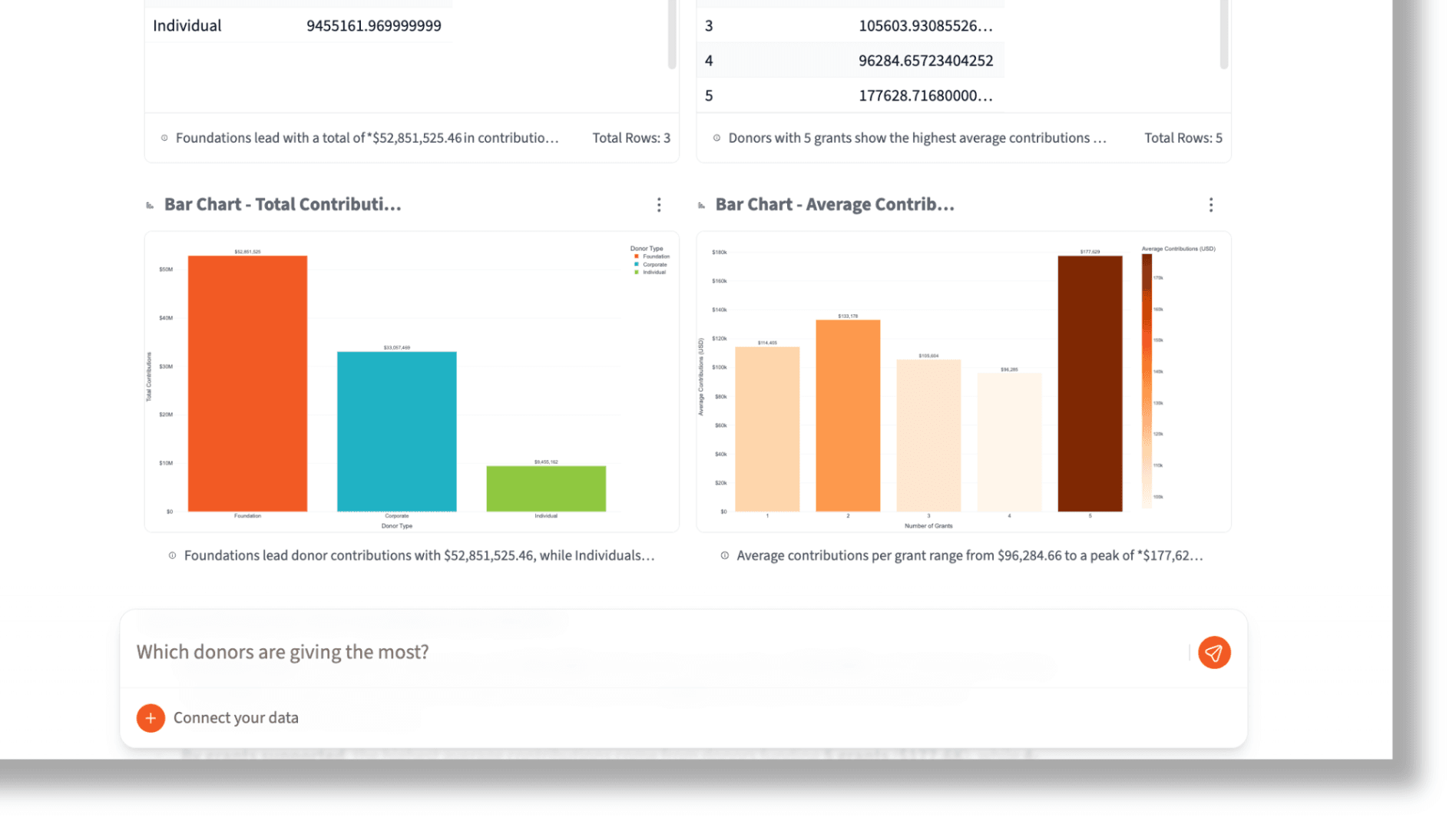
Querri is one platform with one published price. Everything is included—AI features, data cleaning, dashboards, sharing, and support. You'll never get a surprise bill from a second vendor.
Single Bill
One vendor, one price—no dual billing surprises
All-Inclusive
AI, dashboards, automation, and support included in every plan
Budget Confidence
Know your exact cost before you commit

Built for Business Users, Not Data Engineers
Databricks was designed as a data engineering platform first. Its BI and visualization capabilities are still maturing, and Genie's 20 queries-per-minute rate limit means even curated experiences hit walls during peak usage.
Querri was built from the ground up for business users. The natural language interface, automated data preparation, and instant visualizations mean your marketing, sales, and operations teams can get answers without ever filing a ticket with engineering.
Business-First Design
Built for analysts, marketers, and operators—not engineers
No Rate Limits
Ask as many questions as you need without hitting QPM walls
Instant Visualizations
Get charts and dashboards automatically with every answer
Total Cost of Ownership
A realistic look at what you'll actually pay.
| Cost Category | Querri | Databricks |
|---|---|---|
| Per-User License | From $16/user/mo (Core) to $50/user/mo (Pro) | DBUs $0.07–$0.65+/hr + cloud infrastructure. Dual billing means $1K budget becomes $2K–$3K total |
| AI / NL Features | Included in all plans | Genie requires curated semantic layers; 20 QPM rate limit |
| Implementation | Self-service, minutes to start | 4–8 weeks of data engineering and lakehouse setup |
| Training | No training required | Data engineering expertise required; Genie curation training |
| Typical Mid-Market Annual | $2K–$6K/year for most teams | $24K–$36K+/year including cloud provider costs |
See More Comparisons
See how Querri stacks up against other analytics platforms.
Frequently Asked Questions
Common questions about how Querri compares to Databricks.
Databricks was built as a data engineering platform first, and its interface reflects that. Business analysts who want to explore data without writing code or SQL will find it challenging. Databricks Genie requires analyst-curated semantic layers (Genie Spaces) before business users can ask questions. Querri is designed for business users from the ground up—ask questions in plain English with no setup required.
Databricks uses a dual-billing model: you pay Databricks for DBUs ($0.07–$0.65+ per DBU-hour) and your cloud provider (AWS, Azure, or GCP) separately for compute and storage. A $1,000 Databricks budget often becomes $2,000–$3,000 total when cloud bills arrive. Typical mid-market annual costs run $36K–$96K+. Querri starts at $16/user/month with everything included in a single bill.
Small teams that need analytics without a data engineering department should consider Querri. Databricks requires 4–8 weeks of setup, dedicated data engineers, and dual billing from multiple vendors. Querri provides a complete analytics platform—from data ingestion to dashboards—that can be set up in minutes with no engineering resources required.
Databricks offers Genie, a natural language interface, but it requires data analysts to build and maintain curated semantic layers called Genie Spaces before business users can ask questions. Genie is also rate-limited to 20 queries per minute. Querri's natural language interface works immediately on any connected data source with no curation or rate limiting.
Databricks Genie is hard-limited to 20 queries per minute (QPM). During peak usage—such as a team standup or end-of-month reporting—this limit can block users from getting answers. Querri has no query-per-minute rate limits, so your team can ask as many questions as they need without hitting artificial walls.
A typical Databricks deployment takes 4–8 weeks to reach production, including lakehouse architecture setup, data pipeline development, Genie Space curation, and team training. Querri can be set up in minutes—connect your data and start asking questions the same day without any data engineering work.
Databricks' dual-billing model is the most common cause: DBU charges appear on your Databricks invoice, while compute and storage charges appear separately on your AWS, Azure, or GCP bill. Many teams discover their actual cost is 2–3x their Databricks budget when both bills are combined. Querri charges a single, predictable per-user price with no hidden infrastructure costs.
Databricks has added BI and dashboarding capabilities, but they are still maturing compared to dedicated analytics tools. The dashboard ecosystem is relatively new and lacks the polish of purpose-built platforms. Querri generates instant visualizations and interactive dashboards automatically with every natural language query.
Genie Spaces are curated semantic layers that data analysts must build and maintain before business users can ask natural language questions through Databricks Genie. Each space requires ongoing curation as data schemas change, creating a permanent dependency on your analytics team. Querri requires no semantic layers—upload data and start asking questions immediately.
Non-technical users cannot use Databricks directly without significant setup by data engineers. Even with Genie, someone must first build curated Genie Spaces. Querri was built specifically for non-technical users—marketing, sales, and operations teams can ask questions in plain English and get visual answers without any technical background.
Querri offers transparent per-user pricing: Free ($0, 15–50 queries/month), Core ($16–20/user/month, 250 queries), Pro ($40–50/user/month, 1,000 queries), and Enterprise (custom, unlimited). Databricks charges $0.07–$0.65+ per DBU-hour plus separate cloud provider costs, with typical mid-market annual totals of $36K–$96K+ including both vendors.
No. A data lakehouse like Databricks is one architectural approach, but it requires significant engineering investment and ongoing maintenance. Querri lets you upload files, connect to databases and SaaS tools, and analyze data immediately—no lakehouse, no data engineering team, no multi-week setup. It is a complete analytics solution without the infrastructure complexity.
It depends on your use case. If your team primarily uses Databricks for business analytics, reporting, and dashboarding, Querri can replace it at a fraction of the cost and complexity. If you rely on Databricks for large-scale data engineering, MLOps, or model training, those workloads require a different class of tool. Querri excels at making data analysis accessible to business users.
Databricks charges separately from your cloud provider. You receive one invoice from Databricks for DBU consumption and a second invoice from AWS, Azure, or GCP for the underlying compute and storage resources. This dual-billing structure makes total cost difficult to predict and manage. Querri has a single, all-inclusive per-user price with no separate infrastructure charges.
For teams that primarily need to ask business questions, build dashboards, and share reports, Databricks is often overkill. Its lakehouse architecture, data engineering tools, and ML capabilities add complexity and cost that simple analytics use cases do not require. Querri is purpose-built for business analytics—fast to deploy, easy to use, and priced for teams that need answers, not infrastructure.