Anchor questions and collections
Start with the question your business keeps asking. Querri builds the data around it.
An anchor question is the broad question a collection is built around, like "What is our revenue by channel?" Narrower questions sit under it, each answered by a view built for it. Every answer, KPI and dashboard in Querri traces back to a question someone actually asked.
The core of the Library
Everything in Querri starts from a question.
What a collection is, how one broad question anchors it, how narrower questions break it into pieces a view can answer, and what a saved question buys you the next time someone asks.
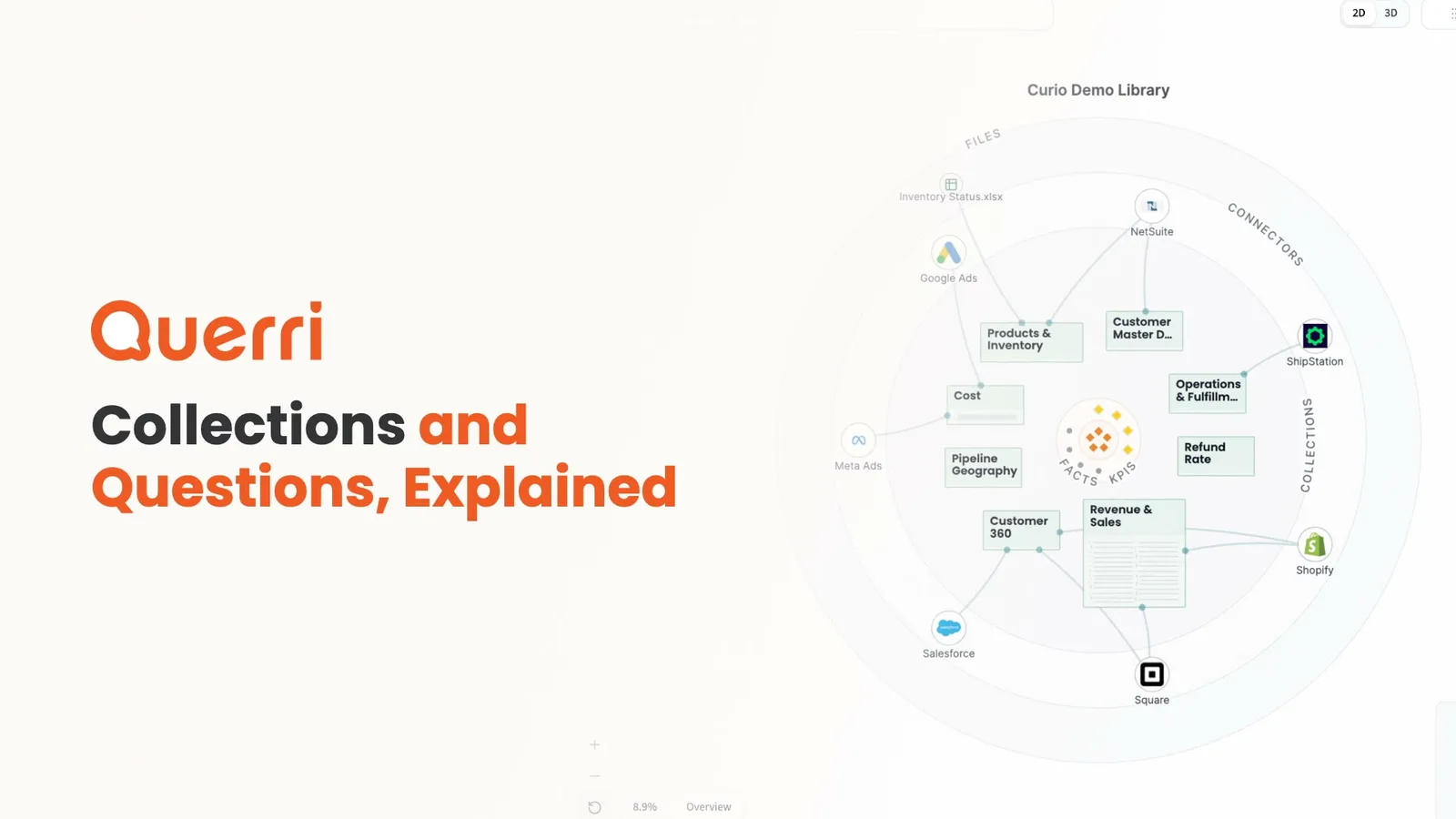
A narrated walkthrough: a collection is built around an anchor question, refining questions sit under it, each view answers one question well, and Querri reuses that view when a similar question comes up.
Why it's hard
Getting from a business question to trusted data has always taken a while.
Most data work starts from the tables and gets to the questions last. The questions are what tell you which data matters, how to clean it and what a number should mean, so the work tends to loop.
Tables first, questions last
A data project models the warehouse, then builds dashboards, and only then finds out which questions people needed answered.
The first dashboard raises new questions
It's normal for the first version in front of leadership to lead to more questions, and each round takes time to rebuild.
Questions live in decks and tickets
The list of what the business wants to know sits in a slide or a backlog, apart from the data that's meant to answer it.
AI chat starts from an empty box
You can ask anything, and keeping track of the questions that matter, and coming back to them when new data lands, is up to you.
Querri makes this easier: it keeps your questions in the Library, next to the data and definitions that answer them.
The idea
One broad question. The narrower ones that answer it.
A collection is one business concern, built around its anchor question: revenue by channel, inventory by warehouse, how fast new customers get value. Under it sit the refining questions, each taking one angle. On a collection page they're called the Main question and the Follow-up questions.
- A refining question narrows the anchor to one channel, one period or each customer, or chases a cause.
- Each question links to the views that answer it and the KPIs that measure it, in both directions.
- A collection also holds its facts and source tables, so one topic keeps everything it depends on in one place.
Why split it
One view answers one question well.
A view is data that's already joined, cleaned and calculated, carrying your business rules. Querri answers from a saved view only when the view clearly owns the question, neither narrower nor wider than what was asked. A broad question rarely has one view that fits it, and a narrow one is much easier to match. So the anchor organizes, and the refining questions get answered.
- When a view is built for a question, Querri records that the view answers it.
- The next time someone asks something similar, the Librarian starts from that view and says Read from it, so the answer is faster and carries the same rules.
- On questions the company had already answered, reusing the saved answer was 4.6× faster than a leading general-purpose AI agent, with 2.8× fewer tokens, at 6.1× lower cost.
What makes a good anchor
The questions you come back to, in your own words.
The Librarian coaches each new question toward one worth building around. A good anchor passes four tests.
Broad enough
It gathers a cluster of follow-ups. "How is revenue doing by channel?" does; "What was revenue on March 3?" doesn't.
Recurring
It's something the business comes back to every week or month, not a one-time look.
Pulls things together
It connects related questions, KPIs and data that would otherwise sit in separate reports.
Yours
It's about how your business runs, in your words, not a textbook question about a company like yours.
In the app
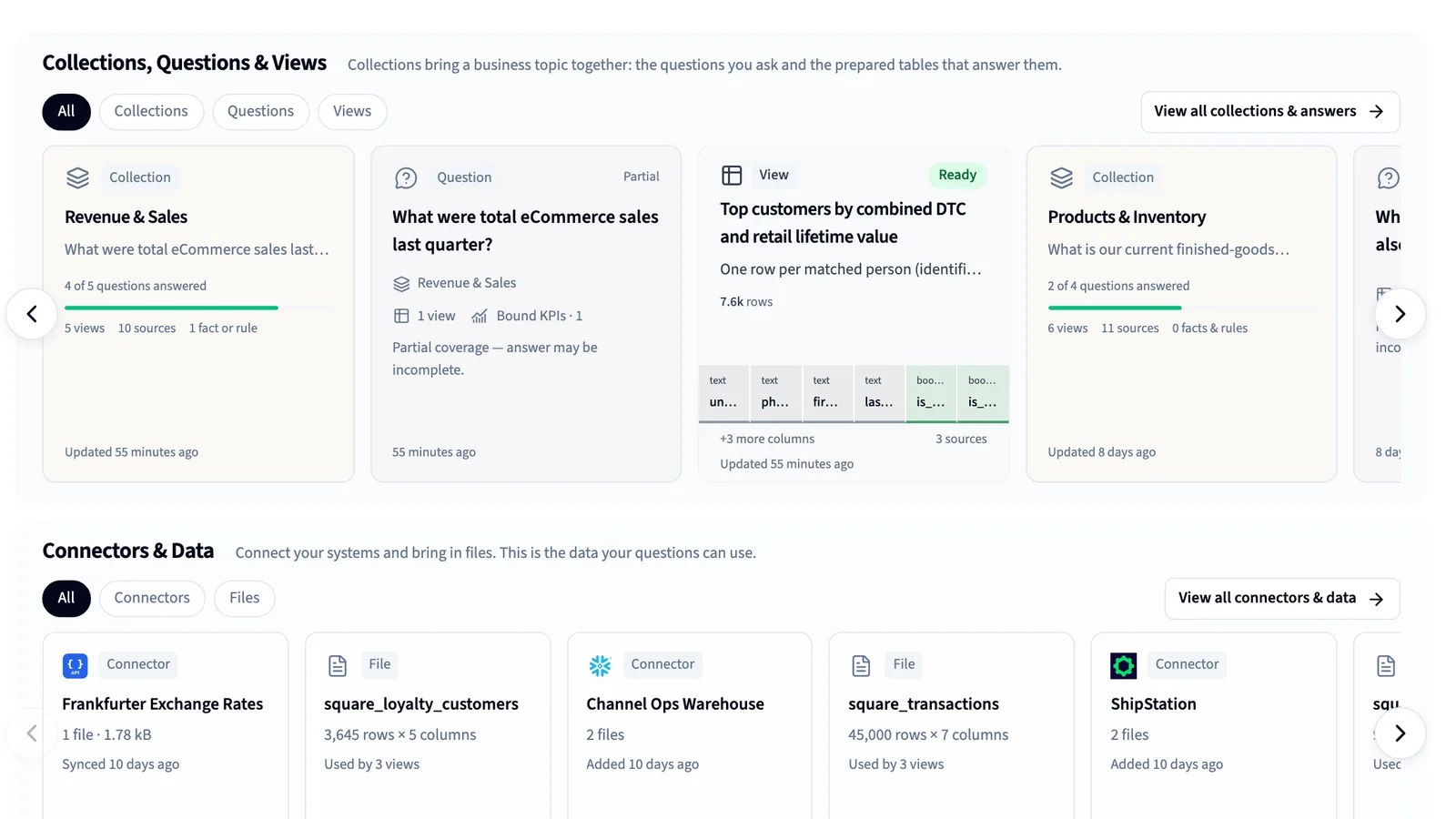
A collection, its main question and the view that answers it.
Screenshots of Querri with a demo company's data: a collection's coverage, a question answered by a view, and an answer read straight from a saved view.
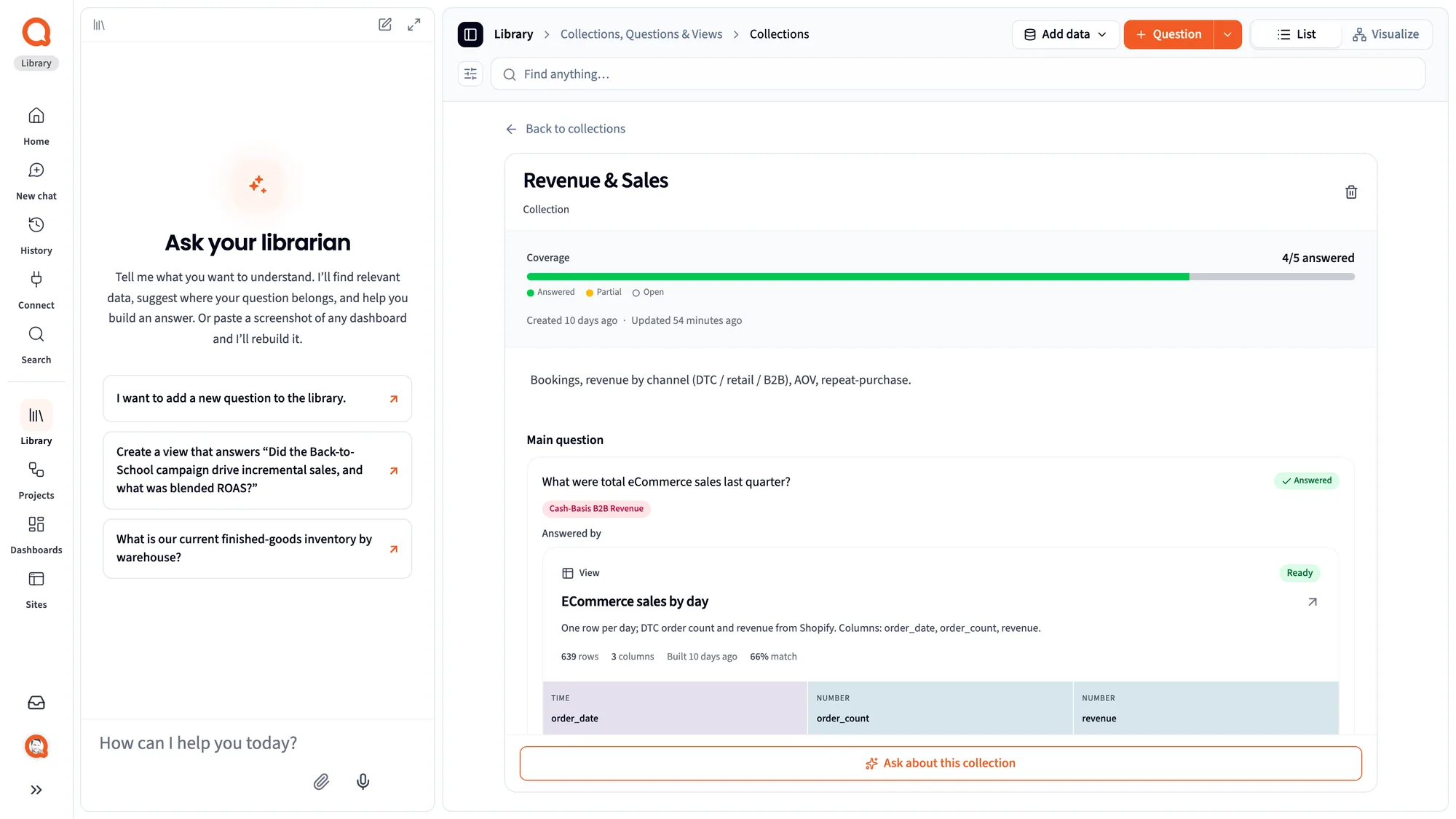
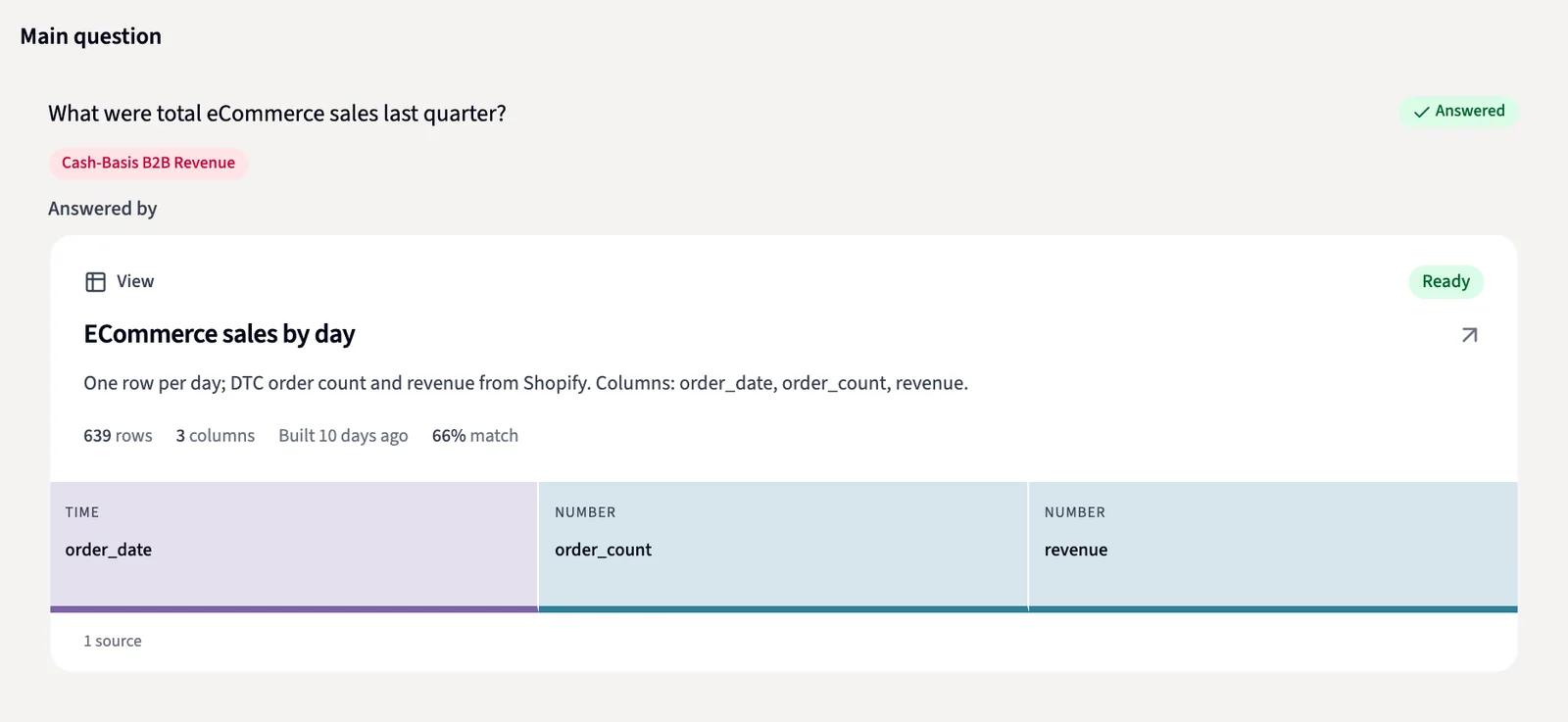
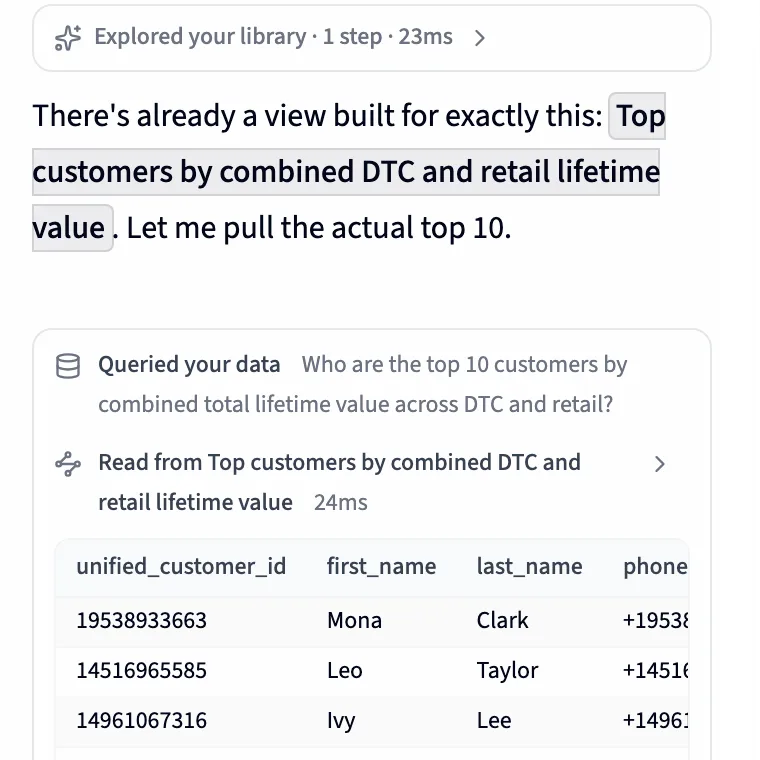
Coverage
See which questions are answered, and which are still waiting.
Every question carries its own status, so a collection shows how much of the concern is covered. Answered means a view answers it. Answerable means the data is there and a view just hasn't been built. No view yet marks what's next. And whenever someone adds data, Querri checks which open questions it can now answer and proposes the view in the Inbox.
- One click on + Build a view to answer this and the Librarian shows its plan before it builds.
- A question your sources can't reach yet says so, and tells you what to connect next.
- Nothing is added to the Library without a person's OK.
Before any data
Your questions come first. The data model follows them.
Setup opens with "What keeps you up at night?" Querri turns your words into a collection with a main question, follow-ups and up to three KPIs, written into the Library before anything is connected. When the data arrives, it works through up to six of the questions you chose and checks each answer with a real query.
- The questions you set decide how everything you connect gets organized: what a new source is for, which views to propose, what to name things.
- There's no requirements phase before the first answer. Start asking, and the Library fills in as you go.
How it works
From one question to a collection that keeps working.
- 1
Ask the question
Ask the Librarian or press New collection. Either way, the first thing it asks for is the question you keep coming back to.
- 2
Querri builds around it
It suggests narrower questions, links the KPIs that measure them and proposes a view for each. You see the plan on a review card before anything is built.
- 3
Answers come from the same place
Each view is recorded against the question it answers, so the next similar question starts from it, in chat, on a dashboard or in Claude.
Who it's for
One set of questions, three people who rely on it.
Data consumer
Ask what you actually want to know, in your own words. If the team already answered it, the answer comes back in seconds, from the view built for it.
Data owner
Your questions decide how the data gets organized. Coverage shows what's answered, and the questions your data can't reach yet tell you what to connect next.
Data team / IT
Requirements live as items in the Library, linked to the views that answer them. Every view's SQL is one click away under How it's computed, so you can read and change it.
FAQ
Questions about anchor questions
What is an anchor question?
The broad question a collection is built around, like "What is our revenue by channel?" It names the concern. The narrower questions under it, called refining questions, each take one angle and are what views get built to answer.
Are main questions and anchor questions the same thing?
Yes. The Questions tab and a question's panel say anchor question and refining question. A collection page calls the same pair Main question and Follow-up questions.
What is a collection?
One business concern: its anchor question, the refining questions under it, the views that answer them, and the facts and source tables they depend on. A Coverage bar shows how many of its questions are answered.
Do I have to write all my questions before connecting data?
No. You can write them down first, or connect a source and start asking. Querri works from your source tables when there's no view yet, and the collections build up as you go.
Why doesn't Querri build one view for the broad question?
Because a view is used for an answer only when it matches the question's scope, neither narrower nor wider. A broad question rarely has one view that fits, so the anchor organizes and the narrower questions get answered.
What do Answered, Answerable and No view yet mean?
Answered: a view answers the question. Answerable: your data can support an answer, but no view exists yet. No view yet: neither, which usually makes it the next thing to work on.
Will Querri add questions on its own?
It suggests them, during setup and in the Inbox overnight. Nothing is added to the Library until a person accepts it.
Start with the question you keep coming back to.
Querri builds the collection around it, answers each part from your data, and keeps track of what's covered and what's next.
SOC 2 Type II, HIPAA and ISO 27001:2022 certified, and your data never trains a model.