Which delivered loads haven't been invoiced yet?
Join your Tai load export to QuickBooks Online invoices. See every delivered load with no invoice, how long invoicing takes, and what each older load is waiting on.
Open QuerriWhat you'll need
Querri (Free trial) to join the exports and run the checks
QuickBooks Online and a Tai load export: Step 1 says what each adds
Your billing rules: so every load is judged the same way
Free resources
Start your free trial here →Sample data sets
Synthetic data for a made-up freight brokerage. Not real shipper data.
Need help?
If you have any questions, you can request a demo or email our team.
Before we begin
Month end asks a simple question: what did we deliver and not bill? The TMS can say a load is invoiced while the accounting system has never seen the invoice. Loads wait on PODs, statuses drift, and the unbilled number has meant comparing two reports line by line.
This playbook finds every delivered load with no invoice, measures how long invoicing usually takes, and splits what is late into the action each pile needs.
How it works:
- • Upload the Tai export and connect QuickBooks
- • List delivered loads with no invoice
- • Measure days from delivery to invoice
- • Split the late loads by what they wait on
- • Build the unbilled revenue view
Follow the steps
Upload the Tai export and connect QuickBooks
Two systems, one project:
- •
QuickBooks Online: invoices, each naming its loads in the memo.
- •
Tai load export (or your TMS load report): delivery time, POD received date, Tai invoice number and revenue for each load.
QuickBooks Online connects directly and syncs on a schedule. The Tai export comes in as a file; upload next week's over the old one and every view rebuilds.
Tip: Pull three months of loads, so every shipper has enough invoiced loads to measure its usual time to invoice.
-
 QuickBooks invoices
-
 Tai load export
 One project
List delivered loads with no QuickBooks invoice
Start with everything delivered and not yet billed:
"Which loads has Tai delivered that QuickBooks hasn't invoiced? Split this week's deliveries from anything older."
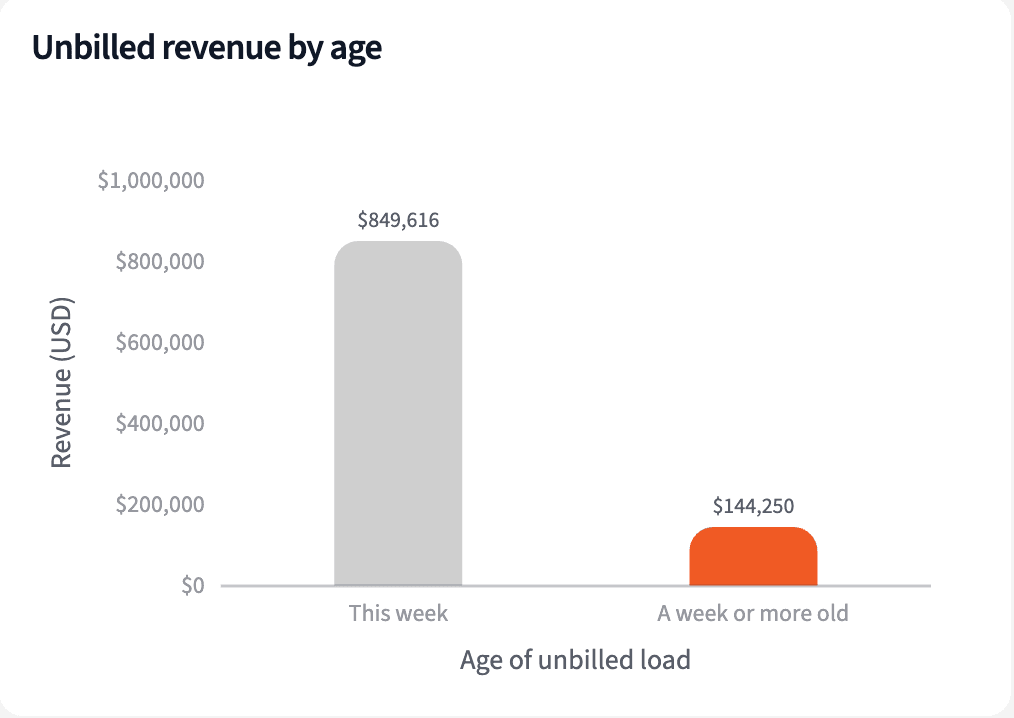
598 loads, $994K, are delivered and not invoiced. 507 of them were delivered this week and are moving as expected. The 91 older loads, $144K, are the ones to work on.
| Delivered | Loads | Revenue |
|---|---|---|
| This week (October 26 to November 1) | 507 | $849,616 |
| A week or more ago | 91 | $144,250 |
| Total | 598 | $993,866 |
Delivered loads with no QuickBooks invoice on November 1, 2026.
Measure days from delivery to invoice, by shipper
Know the usual pace before calling anything late:
"Since August, how many days does it take from delivery to invoice, for the company and for each shipper?"
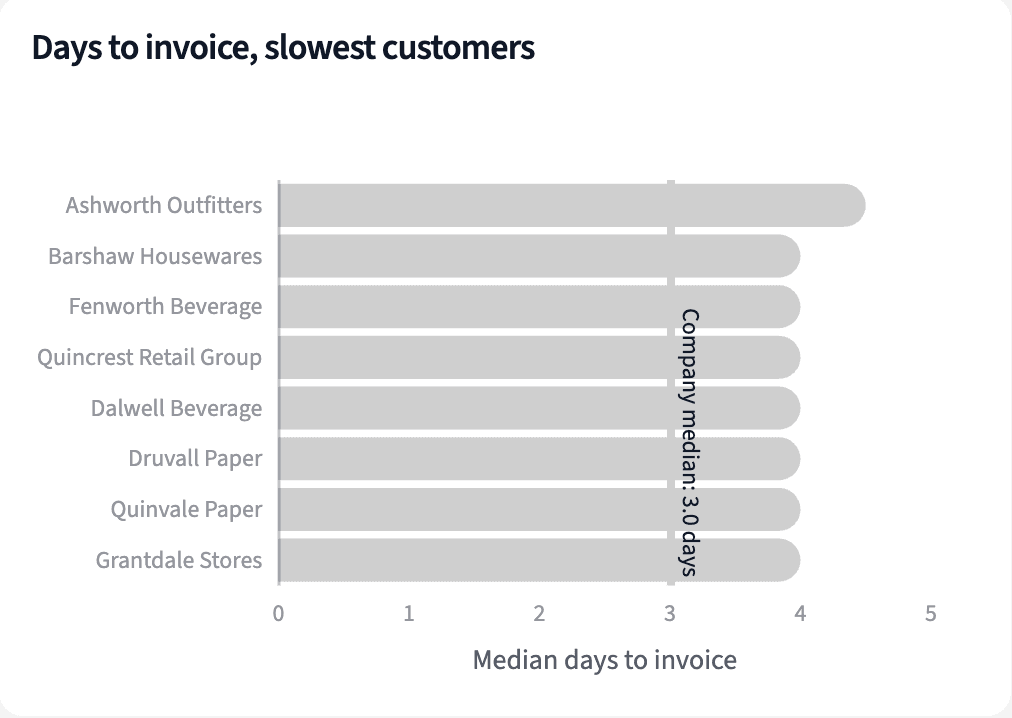
The company invoices in a median of 3 days, and 58.4% of loads within 3. Ashworth Outfitters is the slowest at 4.5 days, with 37.5% of its loads invoiced within 3.
| Shipper | Invoiced loads | Median days |
|---|---|---|
| Ashworth Outfitters | 32 | 4.5 |
| Barshaw Housewares | 36 | 4.0 |
| Pellwick Stores | 113 | 4.0 |
| Dalwell Beverage | 49 | 4.0 |
| Company | 8,382 | 3.0 |
Days from delivery to invoice, loads delivered August 3 to November 1, 2026.
Split what is waiting by what it is waiting on
Put each older load in one pile, so each pile has one owner:
"For loads delivered a week or more ago and still not invoiced: which have a Tai invoice number but no QuickBooks invoice, which are waiting on a POD, and which could be invoiced today?"
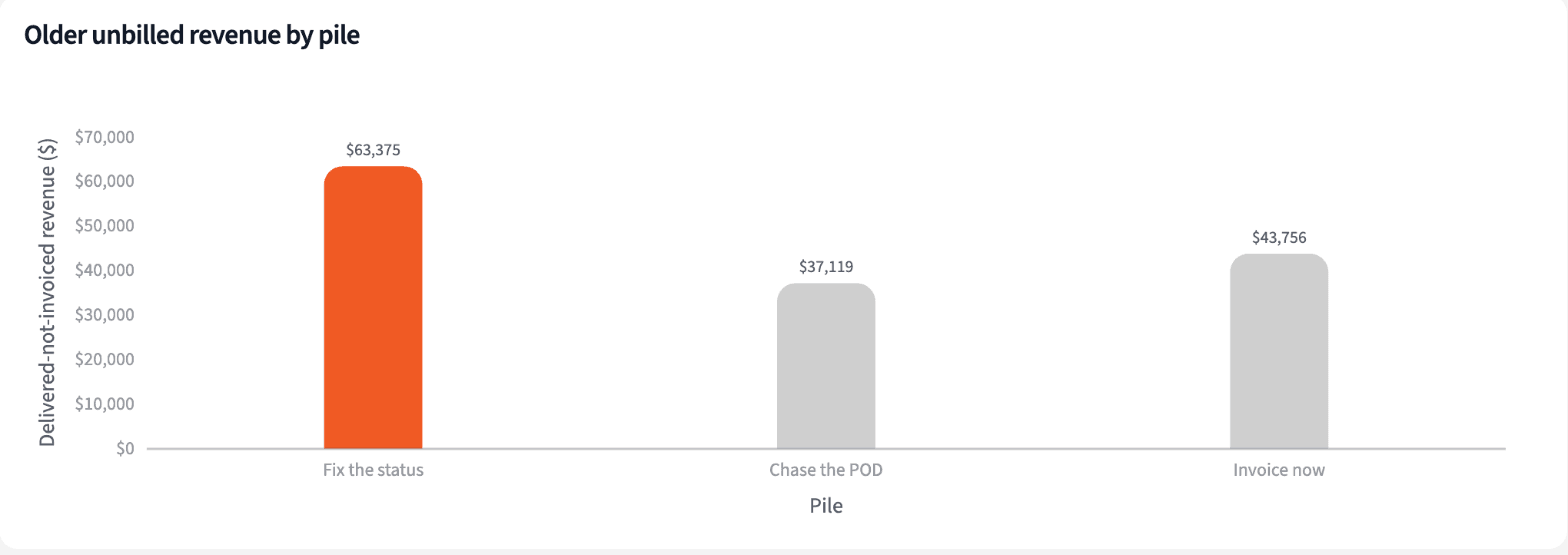
38 loads have a Tai invoice number that never reached QuickBooks, dated from October 12. All 24 POD waits sit with three carriers. 29 loads have their POD and could be invoiced today.
| Pile | Loads | Revenue |
|---|---|---|
| Fix the status: Tai invoiced, QuickBooks not | 38 | $63,375 |
| Chase the POD | 24 | $37,119 |
| Invoice now | 29 | $43,756 |
| Total | 91 | $144,250 |
Loads delivered before October 26 with no QuickBooks invoice, by what they wait on.
Build the unbilled revenue view for month end
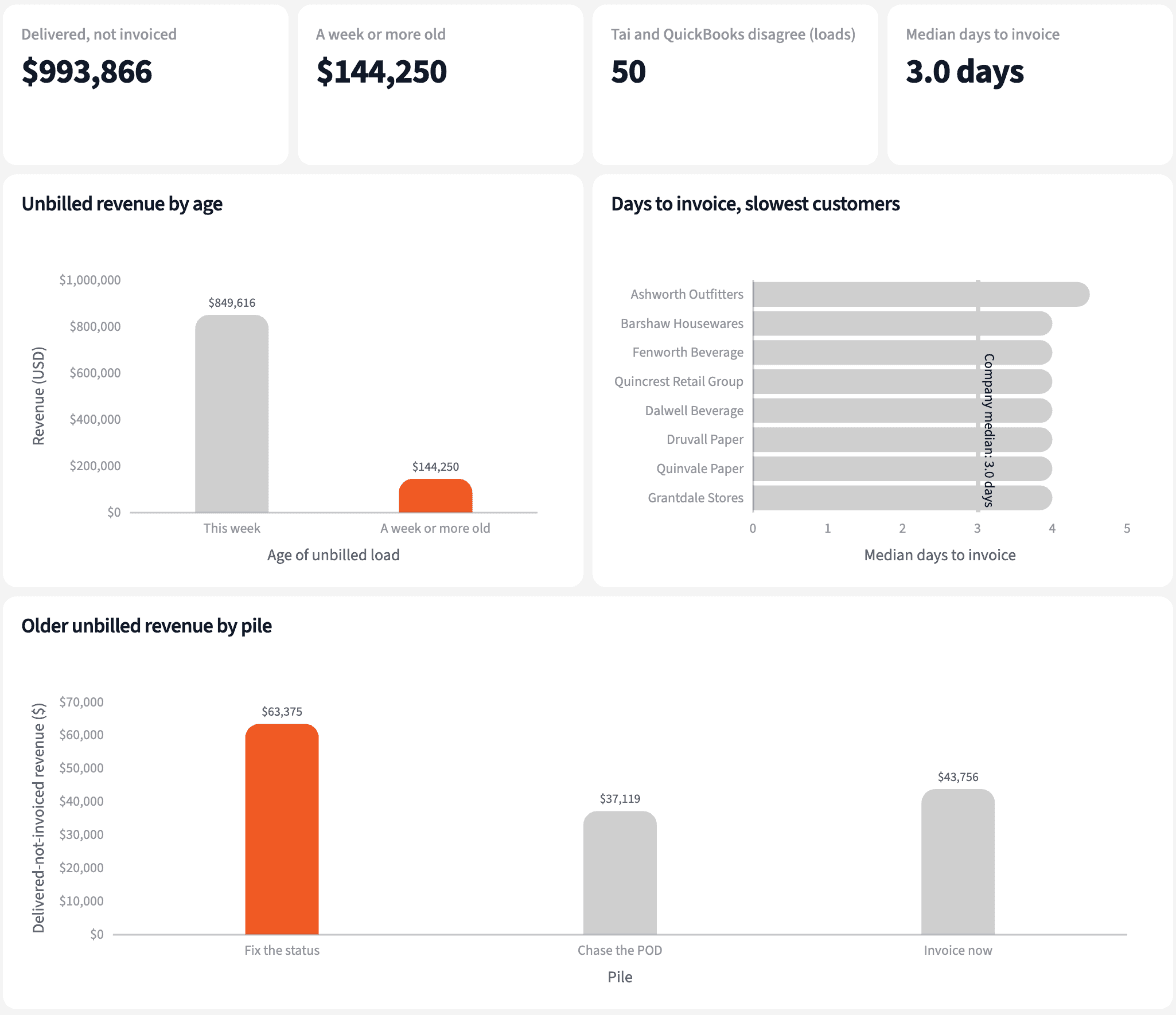
Four numbers for the close, and the first action for each pile.
The narrative Querri writes:
Most unbilled revenue is last week's deliveries moving as usual. The older $144K is three separate problems, and the largest is two systems that disagree.
What you can create or export:
- The list, to Excel, CSV or Google Sheets
- A live dashboard that refreshes with each QuickBooks sync
- A presentation for the meeting, to PDF or PowerPoint
| Pile | Revenue | First action |
|---|---|---|
| This week | $849,616 | Invoice as PODs arrive |
| Fix the status | $63,375 | Check the QuickBooks sync |
| Chase the POD | $37,119 | Call the three carriers |
| Invoice now | $43,756 | Invoice today |
First action for each pile, month end October 2026.
Close the month knowing what was delivered and not billed.
Try it on your own dataTips for a month end with no surprises
Trust the accounting system for invoiced
A Tai status can say Invoiced when QuickBooks has no invoice. Count a load as billed only when the invoice exists in the books.
Give every pile one owner
Status fixes go to whoever runs the sync, POD chases to the carrier team, and ready loads to billing. A list split this way gets worked the same day.
Teach Querri your rules once. Every answer after that follows them.
What delivered means, what counts as invoiced, when a load is late: say each rule once and Querri applies it to every question on that data.
Show me how
Say it in chat
Settle a rule in conversation and the Librarian records it as a fact under Facts & Rules, attached to the table it governs. Every later question on that data applies it, whoever asks, and every view built afterwards carries it.
"A load is invoiced only when a QuickBooks invoice names it in the memo, not when Tai says Invoiced. Save that as a rule for the Tai loads table."
Or bring the document that already says it
Upload your billing procedure like any other file. Querri files a From a document card in the Inbox with the statements it found, each with its page and exact words; tick the ones to keep and they become facts. The rules this playbook depends on:
- Delivered: the load has a delivery time in Tai
- Invoiced: a QuickBooks invoice names the load in its memo
- Revenue: Tai Customer Total
- Late: delivered a week or more ago with no invoice
- Days to invoice: invoice date less delivery date
- Piles: fix the status, chase the POD, invoice now, in that order
"Read our billing procedure and propose the rules it states about PODs, invoice timing and month-end accruals. I'll review them in the Inbox."
Where the rules reach
A rule is attached to the data, not to one person's chat, so it follows the data everywhere:
- • Every question asked in chat, by anyone on the accounting team
- • Every view the Librarian builds on that data
- • Every step of a project, including the code it writes
- • Dashboards and scheduled runs, each time they refresh
- • Claude and ChatGPT, when they ask Querri
You stay in control
Every rule is listed under Facts & Rules next to the data it governs, where you can edit or remove it. Rules from a document wait for your tick in the Inbox, and a Worth remembering card is how Querri offers one it noticed itself. Workspaces and roles decide who can change what. Company-wide rules go in Settings → Customize; the Library is where the rest lives.
The payoff at month end
The close starts with one unbilled number and three short lists, each with an owner. Changing what counts as late is a sentence.
Frequently asked questions
When is a load delivered but not invoiced?
Why split this week from older loads?
How are QuickBooks invoices matched to loads?
What does fix the status mean?
What about loads invoiced in QuickBooks but not in Tai?
Do I need a TMS connector?
Does Querri change anything in QuickBooks?
How often should this run?
Other popular resources
Playbook
Shippers paying slower
Which shippers are paying slower than they used to?
Playbook
Carrier bills above the agreed rate
Which carrier bills came in above the agreed rate, or twice?
Demo
Request a walkthrough
See Querri in action with your own data.
Pricing
Compare plans
Find the right plan for individuals, teams, or enterprise.