Querri for Impact Reporting for Nonprofits Connect outcomes to funding, without the spreadsheet overload
Querri helps nonprofits turn raw data into a clear account of what changed. Connect your donor platform and case management system, or upload your spreadsheets, and ask questions in plain language. Querri cleans, joins and summarizes the data, and the report you build this quarter refreshes itself next quarter.
When Outcomes Are Hard to Track, Funders Stay in the Dark
Nonprofits do a lot with limited resources, and impact reporting is often messy, manual and inconsistent.
Program data is in one tool, donor data in another, and outcomes in a set of spreadsheets. Staff spend hours each month tallying results, fixing errors and trying to make the numbers agree.
It is easy to end up counting outputs when funders want to see outcomes. And every grant report and board meeting starts from a blank page, even when it asks the same questions as the last one.


How Querri Turns Your Program Data Into Clear, Compelling Impact Reports
Connect your systems or upload your program, donor and outcome data, then ask questions like:
"How many individuals did we serve this quarter, by program?"
"What's the trend in outcomes by demographic?"
"Which funders support the programs with the strongest outcomes?"
Querri checks and cleans the data, joins the datasets and builds the charts and summaries you need. No code and no waiting on a consultant.
Because the analysis is saved, the same report reruns on new data for the next grant deadline or board meeting.
Special Nonprofit Pricing Available
We offer discounted rates for qualified nonprofit organizations, so you get the tools to show your impact while staying within budget.
What You Gain: Clear Reports, Saved Time, and Stronger Funding Cases
Clear, consistent reporting across programs
Program, donor and outcome data in one place
Much less manual tallying
Reports and dashboards that refresh with new data
Easier conversations with funders
Faster grant applications
How-To in Five Simple Steps
1 Connect or Upload Your Data
Bring in Excel or CSV files, or connect your CRM, donor platform, Google Sheets or case management system from 125+ connectors.
2 Combine Your Data Sources
Link service delivery data with program outcomes or donor history by client ID, date or campaign name. Record what counts as a person "served" under Facts and Rules, and every program report counts the same way, whoever builds it.
3 Clean It Up
Use prompts like: "Remove duplicate clients based on name and date of birth" "Fix inconsistent program names" "Standardize dates to one format" "Flag records with a missing outcome" Querri's Data Audit also lists the problems it finds in each table, most urgent first.
4 Ask Impact Questions
Ask: "Show total people served by program and quarter" Ask: "Chart outcomes by geography and age group"
5 Create a Board-Ready Summary
Turn the results into a dashboard, a formatted Excel workbook or a presentation deck, and schedule it to refresh before each meeting. Next quarter, anyone on your team can rerun it.

Best Practices
Track Outputs and Outcomes
Record what you did (outputs, like meals served) and what changed as a result (outcomes, like job placements). Funders care about both.
Use Timestamps and Unique IDs
Dates and consistent IDs, such as a client or program ID, let you track progress over time and link data across systems.
Keep Data Fresh
Connect your systems so the data updates on a schedule. If you work from spreadsheets, replace the files monthly or quarterly so reports don't go stale.
Group by Meaningful Segments
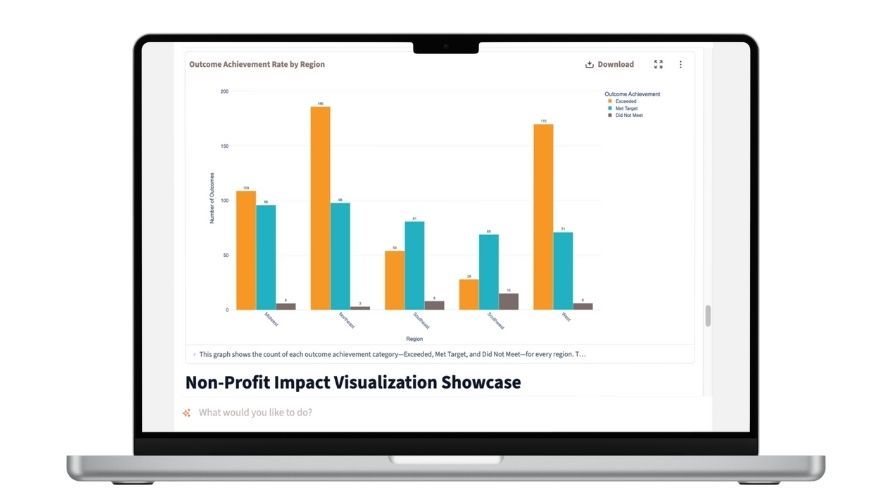
Break results down by program, region or population served to find trends, gaps and equity questions.
Agree Your Definitions Once
Decide what counts as "served" or "completed" and save it under Facts and Rules. Every report then counts the same way, whoever builds it.
Automate What You Repeat
Turn your most common reports into dashboards and scheduled reports that update with new data.
FAQs
What if my data is incomplete or messy?
Can I report across multiple programs or years?
How do I handle qualitative data like testimonials?
Will Querri help with grant-specific metrics?
Can I export charts and summaries?
Can board members see the results without a Querri login?
Is our client data safe?
Do you have more resources for nonprofits?

Step-by-Step Playbooks for This Job
Each playbook walks through one real report: the data to connect, the prompts to use and a recording of the result.
Does the Owner Package Match What Operations Reports?
Join Yardi occupancy, the aging report, Sage Intacct and operations' weekly census report in Querri to build the quarterly owner package and reconcile finance's occupancy with operations'.
Read playbookCustomer SuccessWhich Communities Are Slipping on Resident Experience, and What Else Changed?
Join SurveySparrow survey answers, LifeLoop program attendance, Yardi move-outs and Workday hours in Querri to see which communities' scores fell and what changed alongside them.
Read playbookCustomer SuccessHow to Build a QBR Deck from Current Customer Data in Minutes
Build a polished, data-rich QBR presentation with usage trends, health indicators, support history, and renewal context, without manually pulling data from multiple systems.
Read playbookBuild the Report Once, Reuse It Every Quarter
Grant reports and board packs ask the same questions again and again. Set the work up once, let it refresh, and anyone on your team can run the next one.
Connect your systems
Connect your donor platform, CRM and spreadsheets so nobody exports and pastes before each deadline.
Browse connectorsOne home for program data
The Library keeps program, donor and outcome data together, organized around the questions funders ask.
Explore the LibrarySend funder updates on schedule
Rerun the report each quarter and send it as an email, an Excel workbook or a branded deck.
Automated reportsShare a live dashboard
Give your board a dashboard that refreshes before each meeting, instead of a static PDF.
See dashboards