What's our revenue per subscriber after refunds?
Why it's hard
Klaviyo's revenue per recipient uses the value of each order when it was placed. Refunds and returns are recorded afterwards in Shopify, so the net figure needs both.
 Klaviyo + Querri
Klaviyo is where eCommerce and DTC teams run email and SMS, and its reports answer how each campaign and flow performed. The harder questions cross systems: revenue per subscriber once Shopify refunds are in, which flows bring back repeat buyers, list growth against what you spent on ads. Querri copies your Klaviyo account into one Library on a schedule, next to your store and ad platforms, so you can ask those in plain words.
Querri only reads your Klaviyo data. It never sends a message or changes a profile, list, flow or campaign. You sign in to Klaviyo and approve read access, so nobody handles an API key. SOC 2 Type II, HIPAA and ISO 27001:2022 certified.
Why email and SMS reporting gets hard
Klaviyo's campaign and flow reports are real, careful work. The hard part starts when the question reaches past Klaviyo. Until now that has meant exports and a spreadsheet; Querri makes it one question.
Klaviyo credits a campaign with the value of the orders placed. Refunds and returns land later, in Shopify. Say Klaviyo shows a campaign drove $40,000 and Shopify shows half of it came back: no single report puts those side by side.
By default, Klaviyo credits an order to an email the shopper clicked or opened in the five days before, and each ad platform applies its own rules. Add the reports together and one order can be counted more than once.
New sign-ups are in Klaviyo. What you paid to get them is in Meta Ads, Google Ads and Amazon Ads. Cost per subscriber by source and month means lining up all four.
Whether a campaign made money depends on discounts, cost of goods and returns, and those sit in Shopify or your ERP. Revenue per recipient can look strong on a send that sold mostly at a deep discount.
Do subscribers from the quiz, the giveaway or paid social come back and buy again? Answering that follows each group's orders for months, across Klaviyo profiles and Shopify orders.
What you can finally answer
Each one is a question retention and growth teams ask every month, why it has been hard, and what Querri does with it.
Why it's hard
Klaviyo's revenue per recipient uses the value of each order when it was placed. Refunds and returns are recorded afterwards in Shopify, so the net figure needs both.
Why it's hard
Flow reports count conversions per flow. Whether those buyers came back for a second and third order is a question about months of orders after the flow ended.
With Querri
Querri reads who received each flow and every order event from Klaviyo, then follows those people's orders in Shopify. Say once in Facts & rules what counts as a repeat buyer, and each answer uses it.
Why it's hard
Subscribers are counted in Klaviyo and spend is counted in each ad console, on different dates and in different exports.
With Querri
Connect Meta Ads, Google Ads and Amazon Ads, and Querri puts new profiles by month next to spend by platform, so cost per subscriber is one question. Querri shows each platform's numbers as reported; it doesn't reassign credit between them.
Why it's hard
Klaviyo knows which orders a campaign earned. Discounts, unit cost and returns are in Shopify or your ERP.
With Querri
Querri joins each campaign's orders with discounts and returns from Shopify and unit cost from Shopify or NetSuite. Tell it once in Facts & rules what contribution margin means for you.
Why it's hard
A repeat-purchase curve by sign-up source and month follows each group for months, across profiles in Klaviyo and orders in Shopify.
With Querri
Querri groups profiles by month joined and by the list or source property you already keep on them, then follows their orders. Keep the curve on a dashboard that updates with each sync.
Why it's hard
Paste a Klaviyo export into a chat and each prompt works out revenue per subscriber its own way. Two people get two answers.
With Querri
Link Querri to Claude or ChatGPT once. The assistant reads from your Library, uses your saved KPIs and respects each person's access.
Klaviyo plus the rest
Klaviyo knows who got which message and which orders it credits to each one. Shopify knows what was refunded and returned. The ad platforms know what each new subscriber cost. With all of them in one Library, net revenue per subscriber and cost per subscriber come out of one question.
Klaviyo pairs well with
One definition, every answer
"Engaged" and "attributed revenue" can each be worked out more than one fair way, and two reports that disagree are both defensible. Say once in Facts & rules what they mean for you, and every chat, chart and dashboard built on your Library uses the same definition. When a question could be read two ways, Querri says which reading it used. See how answers work.
Wake up to what changed
Each night Querri compares your KPIs with their own history, by country, list and flow, and does the math rather than guessing. Anything worth a look is in your Inbox by morning. Querri never pauses a flow or edits a list; you decide what to change in Klaviyo.
Retention and lifecycle dashboards
Describe the dashboard you want, or hand Querri a screenshot of the one your team uses now, and change it the same way. Klaviyo's campaign and flow results sit beside Shopify net revenue and spend from each ad platform, and each person can see only the rows that belong to them.
Reports you can stop rebuilding
Revenue Klaviyo credits to email and SMS, after Shopify refunds, divided by active subscribers.
See KPIsRecipients, conversions and revenue for every flow, with refunded orders taken out.
See reportsNew profiles each month beside spend on Meta Ads, Google Ads and Amazon Ads.
See advertising analyticsEach campaign's orders after discounts, returns and cost of goods.
See Facts & rulesHow often each month's new subscribers order again, split by where they joined.
See dashboardsSends, revenue and list growth for the week, sent to the team on a schedule.
Read the playbookWhat comes over
Querri reads the thirteen tables below from the Klaviyo account you connect and keeps a copy current on the schedule you set. Each connection covers one Klaviyo account; connect each account you run, and they all land in the same Library. Profiles carry location and consent, events carry the metric name and order value, campaigns cover email, SMS and push with each message's subject and preview text, and campaign and flow performance cover the last 365 days.
Tables Querri syncs
The first sync loads every profile and event. After that, Querri asks Klaviyo only for profiles updated and events recorded since the last sync. Lists, segments, campaigns, flows and the catalog reload in full each time.
Campaign and flow performance come from Klaviyo's Reporting API for the last 365 days: recipients, deliveries, opens, clicks, conversions, revenue, unsubscribes and bounces for each message, with revenue attributed to Placed Order.
Each of the nine permissions Querri asks Klaviyo for is a read permission. Querri never sends a campaign, triggers a flow, or changes a profile, list or segment.
If a permission isn't granted, Querri skips the tables that need it and syncs the rest, instead of failing the whole sync.
How to connect Klaviyo
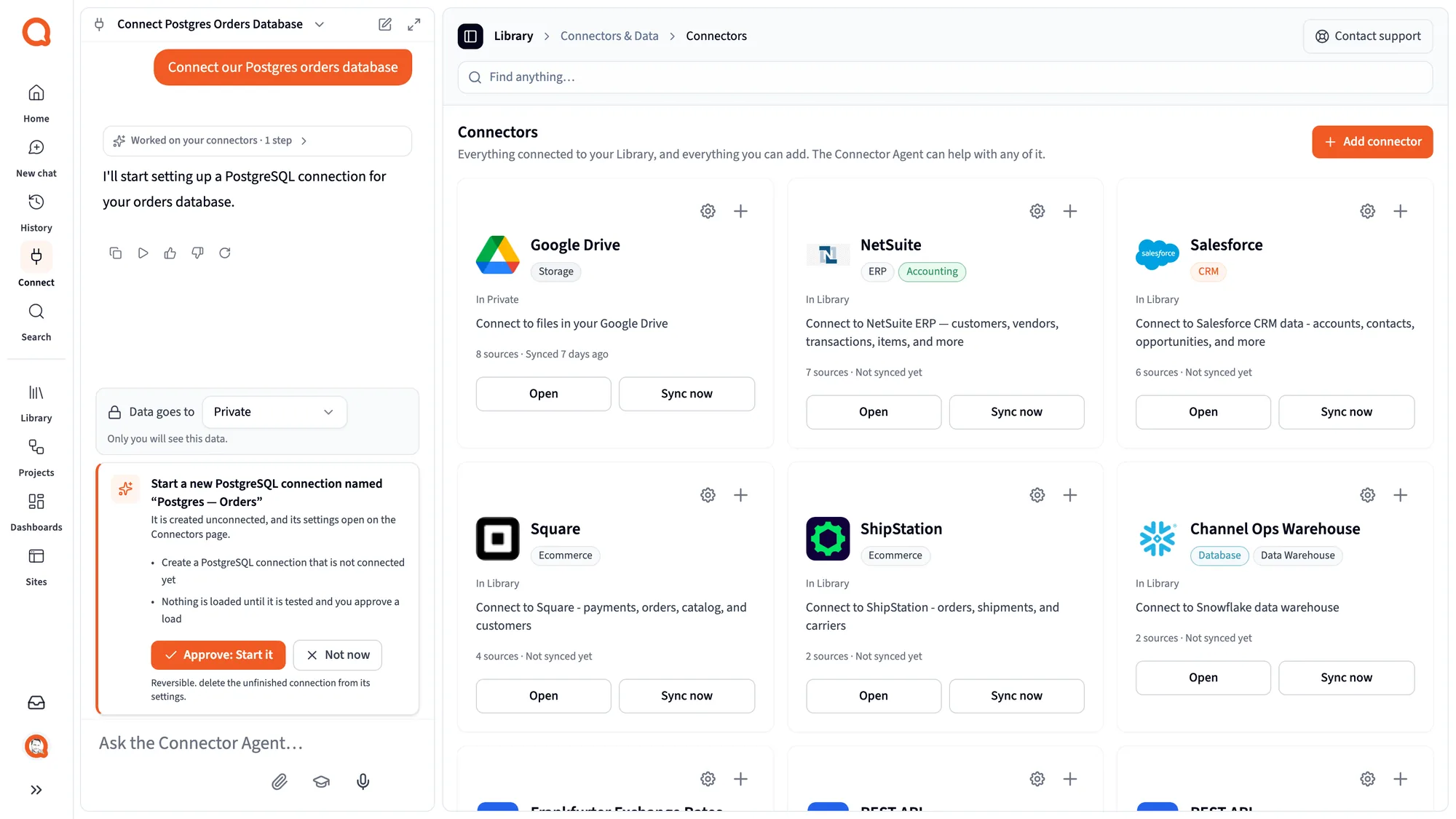
Tell the Connector Agent "connect Klaviyo," or choose Klaviyo in the catalog.
Klaviyo's own sign-in page opens. Nobody copies or pastes an API key, and Querri never sees your password.
Klaviyo lists what Querri asks to read: your account name, profiles, lists, segments, metrics, events, campaigns, flows and catalog. Approve it there.
Nothing loads until you say yes. Pick a sync schedule, and Querri loads every table that has data.
Profiles, events, campaigns and flows are in the Library, so you can ask about them, chart them or schedule a report.
Klaviyo FAQ
Querri copies your Klaviyo account into one Library next to your store, ad platforms and finance data, so you can ask about email and SMS in plain words. Klaviyo's own reports show how each campaign and flow did; Querri answers the questions that also need Shopify orders and refunds, ad spend or cost of goods.
Ask the Connector Agent to connect Klaviyo, or choose it in the catalog. Sign in on Klaviyo's page and approve read access. Then approve the first load and a sync schedule, and the data arrives. There's no API key to create or paste.
No. Querri only reads. Every permission it asks for is a read permission, and it never sends a campaign, triggers a flow, or creates, edits or deletes a profile, list, segment or flow.
Thirteen tables: Profiles, Lists, Segments, List Memberships, Segment Memberships, Metrics, Events, Campaigns, Campaign Messages, Flows, Campaign Performance, Flow Performance and Catalog Items. Campaigns cover email, SMS and push. Events carry the metric name and the order value.
Querri keeps a copy of your Klaviyo data and refreshes it on the schedule you choose. Profiles and events sync incrementally, picking up what changed since the last sync; the other tables reload in full each time.
The Campaign Performance and Flow Performance tables come from Klaviyo's Reporting API, with revenue attributed to Placed Order, so they're Klaviyo's attributed numbers. Revenue after refunds and returns is a separate figure that Querri works out by joining Klaviyo with Shopify.
Profiles and events load in full on the first sync. Campaign and flow performance cover the last 365 days.
Klaviyo's reports need an order metric to attribute revenue to, so without a Placed Order metric the two performance tables stay empty. Every other table still syncs.
No. Querri doesn't run multi-touch attribution or media-mix models and doesn't reassign credit between channels. It shows Klaviyo's attributed revenue and each ad platform's reported numbers next to the orders and refunds your store recorded.
Yes. Each connection covers one Klaviyo account. Add a connection for each brand or region you run, and they all land in the same Library.
Yes. Link Querri to Claude or ChatGPT once. The assistant reads from your Querri Library, uses your saved KPIs and rules, and sees only what that person can see in Querri.
Querri is SOC 2 Type II, HIPAA and ISO 27001:2022 certified. You approve read access on Klaviyo's own page, so no password or API key passes through Querri, and your data never trains a model. Sharing and row-level access set which rows each person sees.
Keep exploring
It takes a few minutes to connect, and Querri only reads your Klaviyo data.